Resources
Holsters and Carry
Quick GlanceHow to choose a holster and a carry position: inside or outside the waistband, appendix, strong-side and off-body, with pros and cons, and what makes a holster safe.
A good holster is a safety device first. It covers the trigger, holds the gun securely, and keeps it in the same place every time you reach for it. Where you wear it is a choice of comfort, concealment and speed.
What Makes a Holster Safe
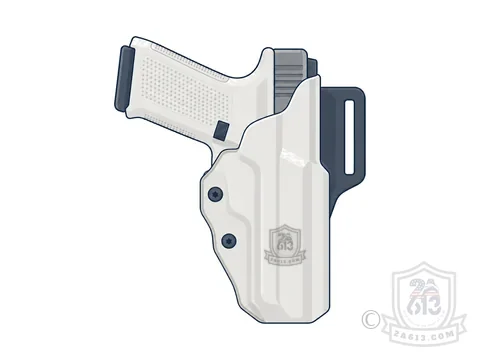
The trigger guard is completely covered. Nothing, not a finger, a shirt or a strap, can reach the trigger while the gun is in the holster.
Made for your exact gun model. A one-size-fits-all pouch can let the gun shift or the trigger get pressed.
Good retention. The gun stays in when you sit, bend or run, and comes out only when you draw it. Many holsters hold the gun by fit alone; some add a strap or lock (Level II, Level III).
A rigid, open mouth. The holster stays open after you draw, so you can put the gun back with one hand without anything folding into the trigger guard.
Secure attachment. Strong clips or loops that hold the holster to a sturdy gun belt, so the holster does not come out with the gun.
Comfort you can live with. A holster you leave at home because it hurts does you no good.
Avoid soft, floppy holsters that collapse after the draw, and any holster that leaves part of the trigger exposed.
Carry Positions
Positions are often described as a clock face around your waist, with 12 o'clock at your belly button.
Inside the Waistband (IWB) and Outside the Waistband (OWB)
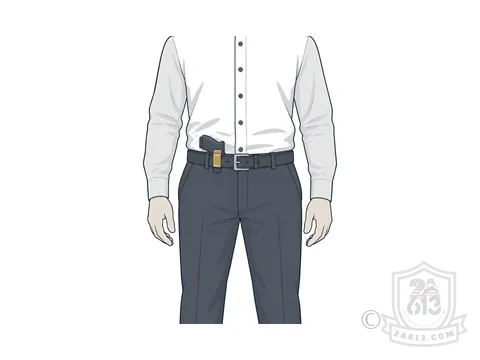
IWB rides inside your pants, held by a clip or loops; it is the most common way to carry concealed. OWB rides on the belt outside your pants and needs a cover garment, like an untucked shirt or jacket, to stay hidden. See IWB / OWB in our glossary.
Strong-Side (Hip)
On your dominant-hand side, just behind the hip (around 3 to 4 o'clock for a right-handed shooter). Comfortable sitting and standing for many people, and the most traditional position. See Strong-Side Carry in our glossary.
Appendix (AIWB)
Inside the waistband in front, around 12 to 1 o'clock for a right-handed shooter. Fast to draw and easy to protect, but the muzzle points toward your body when seated, so careful holstering is a must. See AIWB in our glossary.
Cross-Draw
On the opposite hip, drawn across the body. Some drivers and people who sit a lot like it. The muzzle can sweep people next to you during the draw. See Cross-Draw in our glossary.
Off-Body (Bag or Purse)
In a bag or purse with a dedicated holster compartment. Useful when clothing makes on-body carry hard, but slower to reach, and a bag can be grabbed, set down or forgotten. See Off-Body Carry in our glossary.
A small gun in a pocket holster that keeps it upright and covers the trigger. Never put a gun loose in a pocket with keys or other items. See Pocket Holster in our glossary.
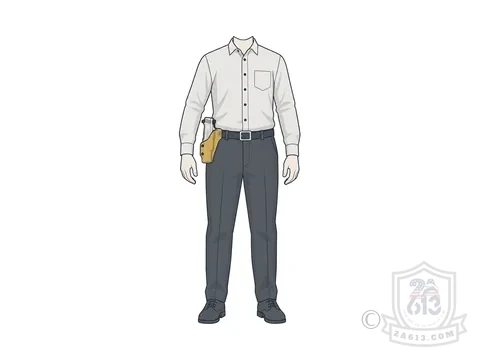
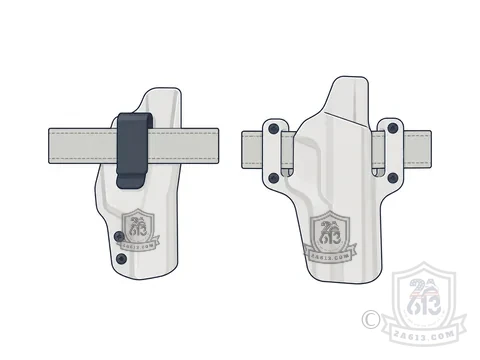
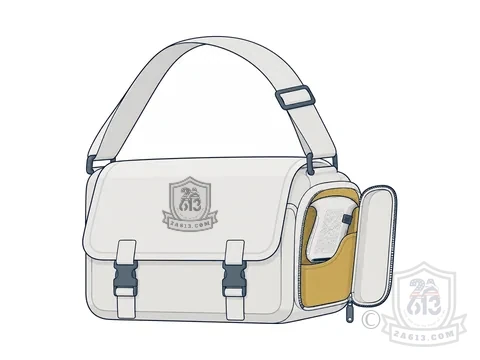
Also in our glossary: Ankle Holster, Shoulder Holster, Printing and Deep Concealment.
Pros and Cons at a Glance
| Position | Pros | Cons |
|---|---|---|
| IWB, strong-side | Conceals well under an untucked shirt; comfortable for many body types; natural draw | Can dig in when seated; harder to conceal with a tucked shirt |
| OWB, strong-side | Most comfortable; easiest and fastest to draw and holster; great for the range | Needs a jacket or long cover garment; harder to conceal |
| Appendix (AIWB) | Very fast draw; easy to protect the gun; conceals well, even for slim builds | Can be uncomfortable sitting; muzzle points toward the body, so holster with extra care |
| Cross-draw | Easy to reach while seated or driving | Muzzle can sweep others during the draw; easier for someone in front of you to reach |
| Off-body (bag) | Works with any clothing; no belt needed | Slowest to reach; the bag must never leave your control; may not be allowed in every state |
| Simple and discreet with a small gun | Only small guns fit; slow to draw while seated |
How to Choose
What do I wear most days? Untucked shirts favor IWB or appendix. Suits and jackets make OWB possible. Tight clothing may point to off-body or pocket.
Do I sit a lot, or drive for work? Try strong-side behind the hip, or cross-draw, and test it seated.
Can I draw and holster it cleanly? Practice with an unloaded gun (see our Dry-Fire Practice guide). If the draw is clumsy, try another position.
Get a real gun belt. A stiff belt made for carry keeps the holster and gun from sagging and moving.
Expect a box of holsters. Most people try a few before they find the one they keep. That is normal.
Holstering Safely
Most holster accidents happen while putting the gun back, not while drawing.
Finger off the trigger, straight along the frame (see trigger discipline).
Clear your clothing away from the holster mouth: shirt tails, jacket toggles and drawstrings can catch the trigger.
Look the gun into the holster and go slowly. There is no reason to rush.
For appendix carry, push your hips slightly forward and your shoulders back, so the muzzle points away from your leg.
If anything feels wrong, stop, take the gun back out and fix it. Never force a gun into a holster.
Many people holster with the holster off the belt at home: seat the gun in the holster first, then put the holster on.
Holster Laws
Some states set rules on how you carry. New Jersey is one: a New Jersey permit allows you to carry a handgun in a holster, concealed on your person, and carrying in public outside a holster is a crime. The law defines a holster as one that securely holds the gun, covers its main body, keeps it in a consistent position, and covers the trigger so it cannot be reached while the gun is seated.(*)Source: N.J.S.A. 2C:58-4(a), (h) and 2C:58-4.4(a)(3) (P.L.2022, c.131), NJ Legislature · checked 11/2026
Because New Jersey's law speaks of a holster on your person, off-body carry in a bag there is a gray area. Other states and permits can have their own rules too. ⚠️ Do your own research or speak to a local attorney.
This page is general information, not legal advice. Pick gear from a reputable maker and practice with it before you carry.
New to the terms? See the 2A Glossary.
To be accepted into our chats: after tapping Join, send us a message through the Contact Us page, choose “Join WhatsApp Groups Request”, then reply to the automatic email with all the requested details.
Your Application, Handled From Start to Finish.
One-on-one help with new applications and renewals. The decision to carry is yours; the paperwork, the checklists and the scheduling are ours.
- We Prepare the PaperworkEvery form filled out and submitted for you, with your authorization. Notary services available.*
- We Check Every DocumentEvery requirement checked before anything goes in.
- You Show Up ReadyYour 18-hour training scheduled, and you're prepped for fingerprinting and the interview.
Three Steps. Zero Guesswork.
- 1Tell Us What You NeedFill out the short request form.
- 2We Review & AdviseWe review your situation and advise on the best approach.
- 3You Apply With ConfidenceYour packet goes in complete, and we stay with you to the finish line.
Every completed application we've handled so far has been approved — but approval is always the agency's decision.
Or message us on WhatsAppA paid service. Every free guide stays free. The initial consultation is free. No paid work starts until you agree to the quote and a paid deposit, which is determined during the initial consultation. *Additional fees and restrictions apply. Past results do not guarantee future approval.
Join the 2A613 Community
Take our community survey and subscribe to updates. We only email about important topics and never sell your email to third parties.
Take the surveyLast updated: 11/07/2026 · כ״ז חשון תשפ״ז