
Resources
Range Etiquette
Quick GlanceHow to be safe and courteous at the shooting range: the safety rules, range commands, what to bring, the shooting line, and cleanup.
A shooting range is a shared space. A few simple habits keep everyone safe and make the day better for you and the people on the line next to you.
The Safety Rules That Never Change
Every range has its own house rules, but these apply at every range, indoor or outdoor, every single time.
Treat every firearm as if it is loaded. Even when you are sure it is empty. Check it yourself. Never assume.
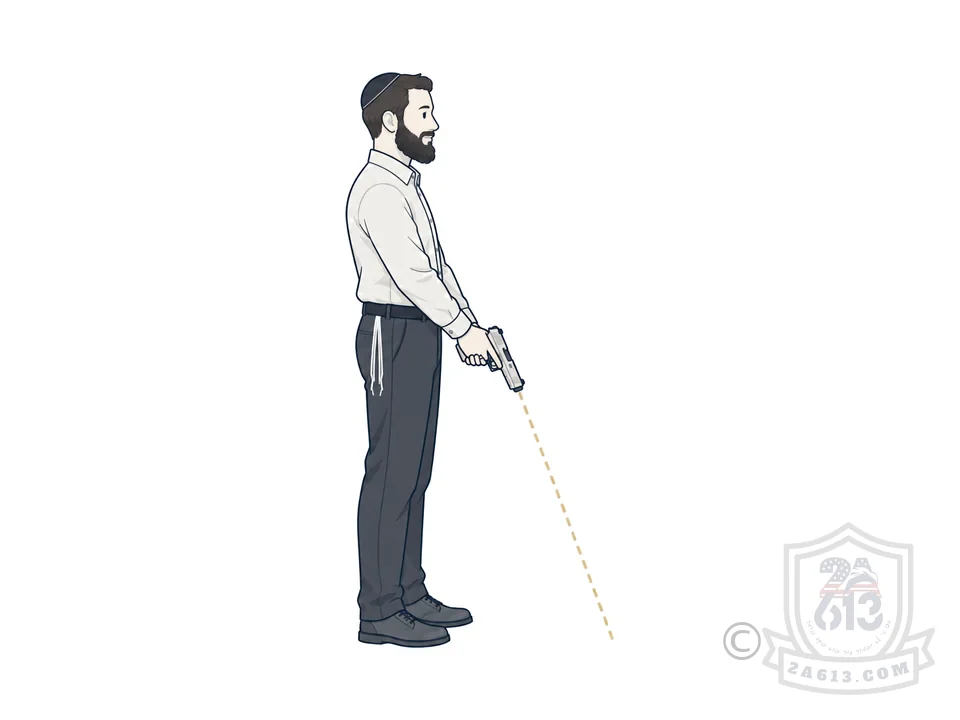
Keep the muzzle pointed in a safe direction. At the range, that means downrange. Never let it point at another person, on purpose or by accident.
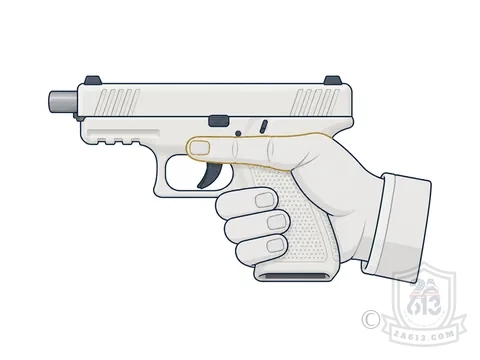
Keep your finger off the trigger and outside the trigger guard until your sights are on the target and you have decided to shoot.
Know your target and what is beyond it. Every shot must end in the backstop or berm. This matters even more outdoors, where open ground may lie behind the targets.
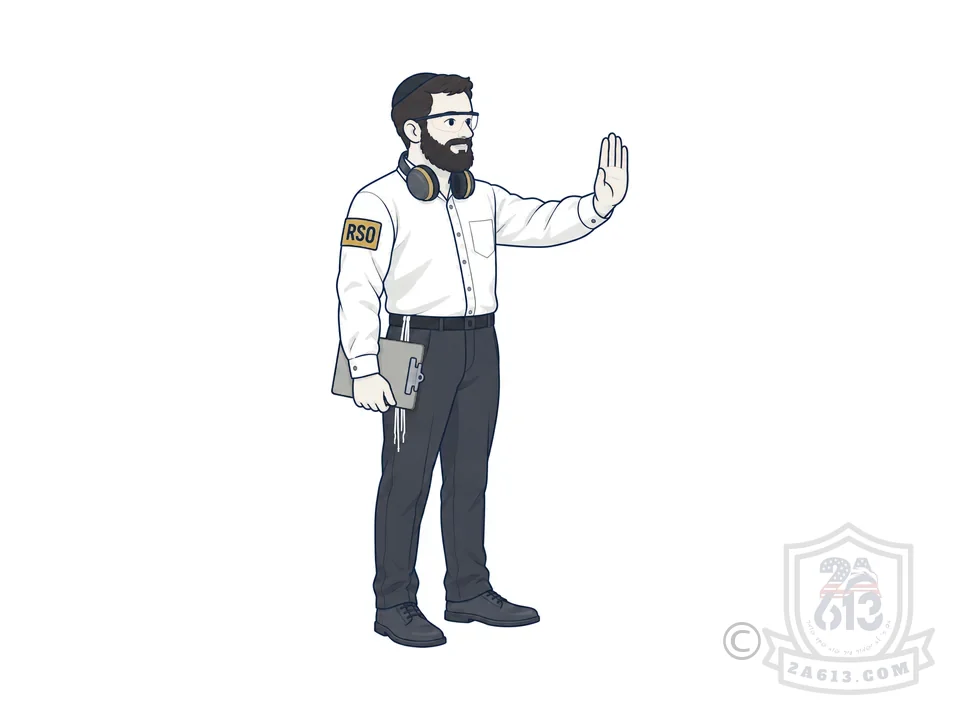
Listen to the Range Safety Officer. The RSO runs the line. Follow their commands right away, and if you did not understand a command, politely ask.
Wear eye and ear protection the whole time you are near the line.
Use the right ammunition for your firearm and for that range.
Stay clear-headed. No alcohol or anything else that slows your judgment, before or during shooting.
Eye and Ear Protection
Both are required at practically every range, and for good reason. Gunfire can damage your hearing for good, and shooting glasses protect your eyes from hot brass, debris and the rare malfunction.
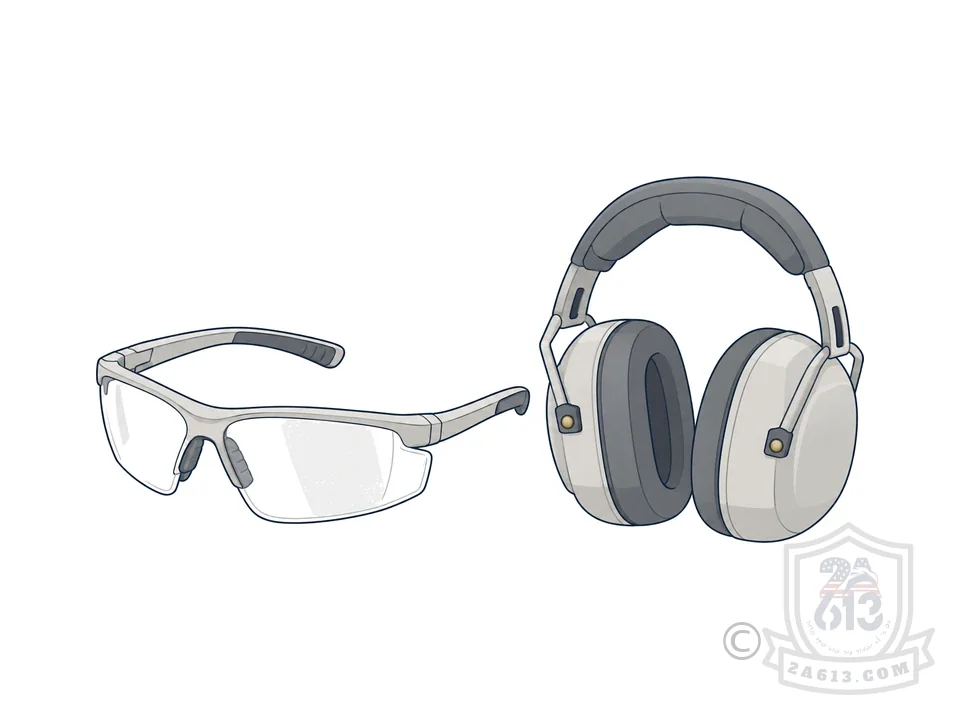
Put them on before you walk onto the range, and keep them on until the range is declared safe or you have left the shooting area.
Indoor ranges are louder. The walls bounce the sound back, so good hearing protection matters even more. Many shooters wear foam earplugs under their earmuffs.
Wrap-around glasses protect from the side too. Regular eyeglasses are not always enough; ask the range if you are unsure.
Hot brass happens. A shirt with a closed collar and a cap with a brim help keep ejected cases from landing where they should not.
Range Commands: Hot, Cold and Cease Fire
Ranges switch back and forth between shooting time and safe time. Learn the words before your first visit so you are never caught off guard.
Shooting Is Allowed
You may handle your firearm at your station and shoot at your target. Nobody goes forward of the line.
Safe to Go Downrange
All firearms are unloaded, actions open, laid down on the bench. Step back behind the line. Only now may people walk out to set or check targets.
Stop Shooting Right Now
Finger off the trigger, keep the muzzle downrange, unload if told to, and wait for the RSO's next instruction. At most ranges, anyone who sees a dangerous situation may call it.
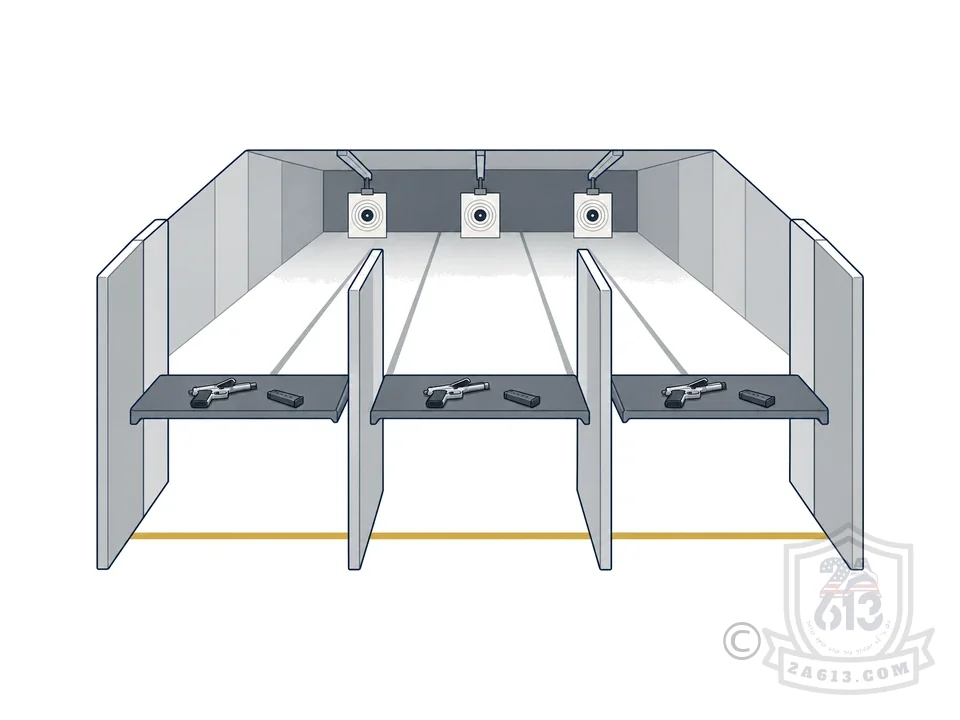
Do not touch any firearm on the bench, not even to clean or adjust it, while people are downrange.
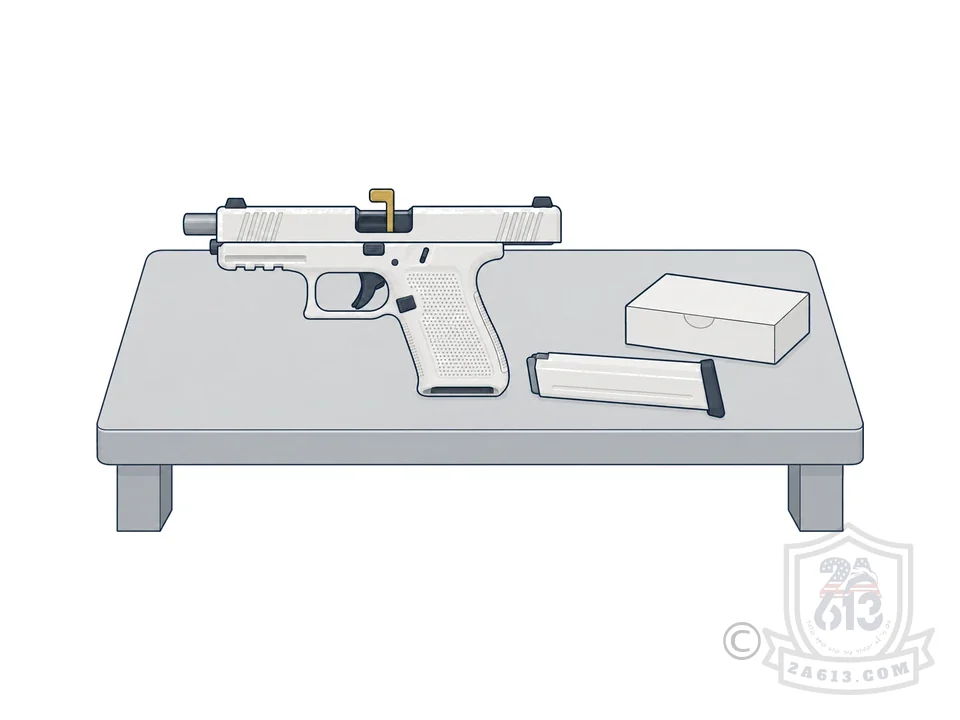
Actions open, magazines out. The range can see at a glance that every firearm is empty. Many shooters put a chamber flag in the open action.
Stay behind the line (often a painted line on the floor) until the range goes hot again.
Never go downrange on your own. Wait until the RSO declares the range cold, even if the line looks quiet.
Outdoor ranges may use flags, lights or horns to show when the range is cold. Learn the signals at check-in and confirm before stepping out.
Before You Go
Call or check the range's website first. Ask about their rules, which firearms and calibers they allow, whether you need a reservation, and what you should bring.
Ask about ammunition limits. Many indoor ranges do not allow certain types, such as steel-core or steel-cased rounds.
Know the law for the trip. Transport your firearm the way your state and any state you pass through requires. See our Safe Storage and Travel guide.
Arrive early. You will have time to check in, read the posted rules and ask questions without feeling rushed.
First time at this range? Many ranges offer a short orientation or a printed rules sheet. Take it.
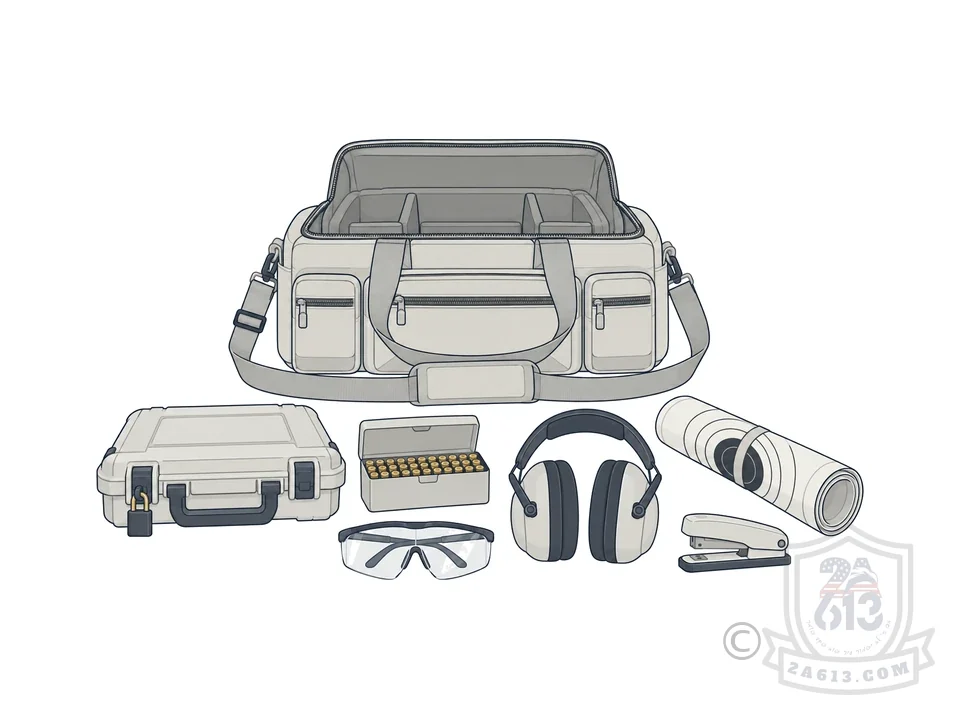
Your firearm, unloaded, in a case (locked if your state requires it)
Ammunition, in its own box
Eye protection and ear protection
Targets and a stapler or tape, if the range does not supply them
Your license or permit and ID
For outdoor ranges: water, sunscreen, a hat and rain gear
At the Shooting Line
Most mistakes happen in the few seconds between the case and the first shot. Take it slow.
Keep it cased or holstered until you are at your assigned station.
Open the case with the muzzle end facing downrange.
Two hands on long guns. When you take out a rifle or shotgun, keep both hands on it.
Open the action and look. Confirm the chamber is empty before you set the firearm down.
Magazine stays out until the range is hot and you are ready to shoot.
Never uncase or handle a firearm behind the line or while the range is cold.
Keep your bench tidy. Only what you need: firearm, ammunition, magazines and your protection. A crowded bench leads to fumbles.
Stay in your lane. Shoot only at your own target, and keep every shot inside the backstop. Never aim at the ceiling, floor, lights or target holders.
Slow and controlled. Many ranges do not allow rapid fire unless it is part of an approved drill or class. Ask first.
If your firearm does not fire or something feels wrong, keep it pointed downrange and raise your hand or ask the RSO for help.
Never turn around with a firearm in your hand. If someone calls you, set it down first, action open, muzzle downrange.
Indoor and Outdoor Ranges
Indoor Ranges
- Louder than you expect: double up on ear protection.
- Lanes are clearly marked. Stay within yours, and keep shots inside the backstop.
- Ammunition and caliber limits are common. Check before you buy.
- Waiting for a lane? Give the shooters room and keep conversation low.
Outdoor Ranges
- Watch your footing. Uneven ground and a firearm in hand do not mix. A range bag or cart helps.
- Learn the flag, light or horn signals before you shoot.
- Fasten targets well so the wind cannot knock them down.
- Dress for the weather and keep your ammunition dry.
- Some rural ranges have no staff. There, you are your own safety officer: be extra careful, watch the people around you, and agree on when the line is cold before anyone goes forward.
Courtesy and Cleanup
Never touch someone else's firearm or gear without their permission.
Give people space. Do not crowd the station next to you or stand right behind a shooter.
Hold advice unless asked. If someone looks like they want help, a friendly offer goes a long way.
Phone calls and long conversations belong outside the shooting area.
Share the time. If others are waiting, do not hold a lane longer than the range allows.
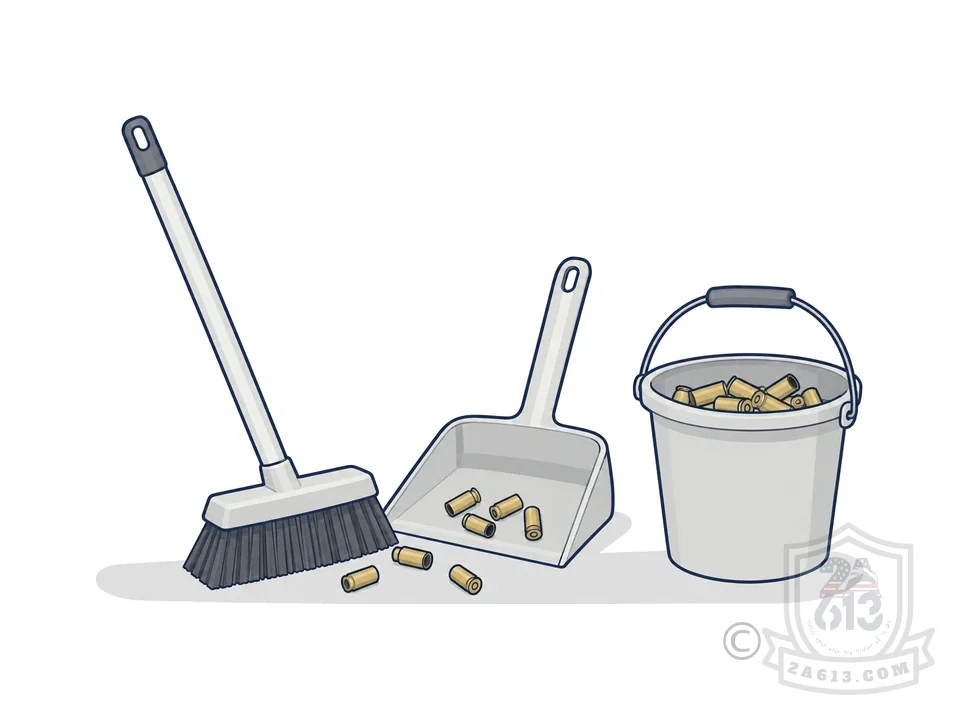
Sweep up your spent brass and put it where the range asks (many have a brass bucket).
Take down your targets and throw away your trash.
Pick up only your own brass unless the range says otherwise.
Outdoors, leave no trace: targets, cases, boxes and trash all go home with you or into the range's bins.
New and Young Shooters
Everyone was new once. Ranges are full of experienced shooters who are glad to help.
Start with a class or a lesson. Many ranges offer beginner courses, women-only sessions and private lessons with certified instructors.
Watch first. Spend a few minutes seeing how others move between hot and cold before you begin.
Bringing a young shooter? Check the range's age rules before you go. Stay right beside them, within arm's reach, the entire time, and keep sessions short and positive.
Fit matters. Ear protection and glasses should fit snugly. Many ranges have smaller sizes for children.
Ask questions. Staff and regulars know the range best.
If You See Something Unsafe
Safety is everyone's job. If you see something dangerous:
Tell the RSO quietly. They are trained to handle it. Let them deal with the person instead of confronting them yourself.
If it is aimed your way, speak up calmly. A simple, friendly word works best: “Hey, just a heads-up, your muzzle is drifting toward me.”
If someone is in immediate danger, call “Cease fire!” loud and clear.
Lead by example. Good habits are contagious.
Keep Learning
The best shooters never stop training. Good places to start:
Training Schools and ClassesClasses and instructors we recommend, including the NY 18-hour courseNSSF: Rules of Firearm SafetyThe National Shooting Sports Foundation's safety rules and guidesWhereToShoot.orgFind indoor and outdoor ranges near you (NSSF)Good habits make the range a better place for everyone. See you on the line, and stay safe.
New to the terms? See the 2A Glossary.
To be accepted into our chats: after tapping Join, send us a message through the Contact Us page, choose “Join WhatsApp Groups Request”, then reply to the automatic email with all the requested details.
Your Application, Handled From Start to Finish.
One-on-one help with new applications and renewals. The decision to carry is yours; the paperwork, the checklists and the scheduling are ours.
- We Prepare the PaperworkEvery form filled out and submitted for you. Notary services available.*
- We Check Every DocumentEvery requirement checked and met, 100%, before anything goes in.
- You Show Up ReadyYour 18-hour training scheduled, and you're prepped for fingerprinting and the interview.
Three Steps. Zero Guesswork.
- 1Tell Us What You NeedFill out the short request form.
- 2We Review & AdviseWe review your situation and advise on the best approach.
- 3You Apply With ConfidenceYour packet goes in complete, and we stay with you to the finish line.
Every completed application we've handled so far has been approved — but approval is always the agency's decision.
Or message us on WhatsAppA paid service. Every free guide stays free. *Additional fees and restrictions apply. Past results do not guarantee future approval.
Join the 2A613 Community
Take our community survey and subscribe to updates. We only email about important topics and never sell your email to third parties.
Take the surveyLast updated: 11/05/2026 · כ״ה חשון תשפ״ז