
Resources
Traveling with Your Gun
Quick GlanceFlying with a firearm (TSA and airline rules), driving through other states under federal safe-passage law, and hotels and rental cars.
Flying and driving with your gun: the official rules, the counter, the trunk, and the hotel. Plus real-world tips from our own trips.
Storing your gun at home? See our Safe Storage at Home guide.
Before You Fly: Plan Ahead
Every airline and every airport is different. No two have the same process. Check your airline's own firearm page and your departure airport before you go.
Leaving New York (JFK, LaGuardia) takes much longer. Plan an extra 15 to 30 minutes or more, even with TSA PreCheck or CLEAR. PreCheck and CLEAR do not speed up declaring a firearm at the airline counter.
Other places, like Florida, can be very quick. Sometimes it is just showing where the gun is in the bag and signing a declaration tag.
Bottom line: leave early and plan ahead.
⚠️ These are practical tips from our own trips. The rules that count are the official ones from TSA, your airline and the states you travel to. Do your own research before every trip.
Flying with a Firearm
Traveling with firearms on a plane in the United States is subject to strict regulations and guidelines set by the Transportation Security Administration (TSA) and federal law.
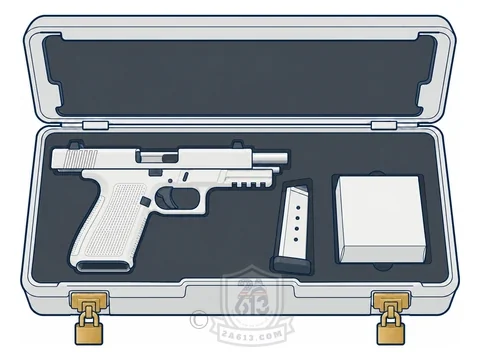
Unloaded and locked in a hard-sided case, in your checked bag, never in your carry-on.
Only you, the passenger, should have the key or combination.
Ammunition in a box made for ammunition (fiber, wood, plastic or metal). TSA allows it in the same locked case as the gun. Check your airline for limits on the amount.
Before leaving for the airport: check the airline's and the airport's websites for their procedures. Inspect your luggage before packing: no loose ammo or other items in your bag or lock box.
Unload your firearm and inspect that it is empty. Remove all the ammo from the magazines and place them in their original packaging.
Magazine limits: review the laws of the state you are flying to, and only take a magazine that is in compliance.
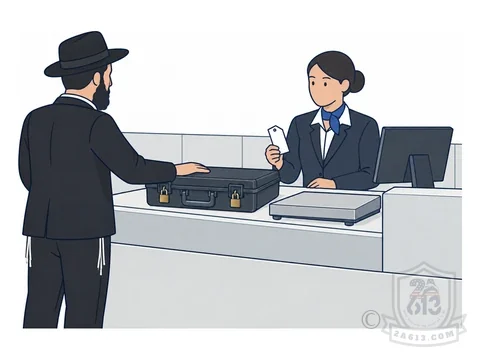
Declare the firearm at the airline ticket counter. You cannot do curbside check-in. Say "I have a firearm to declare in my checked baggage". Do not state "I have a gun". They may get the wrong idea.
Never carry a concealed weapon on your person on a commercial flight.
What to expect: Longer check-in process. You might be sent to the TSA office. You will need to fill out a form. Upon arrival at your destination, your luggage might not be on the regular baggage carousel, it might be at the oversized luggage area, or the airlines lost & found office. Give yourself extra time and stay calm.
License and Permit: You must be allowed to have the firearm where your trip starts and where it ends. Gun laws vary from state to state, and some states require additional permits.(*)Sources: 18 U.S.C. § 926A; TSA, Transporting Firearms and Ammunition · checked 11/2026
It's essential to thoroughly research and comply with all federal, state, and airline-specific regulations before traveling with a firearm. Failure to do so can result in legal consequences, including fines and possible criminal charges. The TSA is known to have heavy fines for having something prohibited when passing through security, in addition to legal fees and possible incarceration. Be careful and double-check your bags, pockets, etc.
Remember Tefillas Haderech (תפילת הדרך) and arrive safely.
Declare each firearm, each time you check it. Ask your airline about limits or fees.
The case must completely secure the gun. A locked case that can be easily opened is not allowed, and the box the gun came in may not be good enough.
Any brand of lock is OK, including TSA-recognized locks. Only you keep the key or combination, unless TSA asks for it to open the case.
Magazines and clips, loaded or empty, must be boxed or inside the locked hard-sided case. Gun parts (magazines, bolts, firing pins, frames and receivers) are checked bags only, never carry-on.
Ammunition: checked bags only, in a fiber (cardboard), wood, plastic or metal box made for ammunition. It may go in the same locked case as the gun. Your airline sets the limit on how much.
For TSA, a gun counts as "loaded" when you have access to both the gun and its ammunition, for example the gun in your bag and the ammo in your pocket.
Flying out of the country? Check U.S. Customs and Border Protection and the other country's rules first.
A gun at the security checkpoint is expensive. TSA lists civil penalties of $3,000 to $12,210 for a loaded gun (or an unloaded gun with ammunition you can reach), and $1,500 to $6,130 for an unloaded gun, plus a referral to the police. Repeat violations can reach $17,062. Check every bag and pocket before you leave home.
Sources: TSA: Transporting Firearms and Ammunition · TSA: Civil Enforcement · checked 11/2026
Real-World Tips from 2A613
This is what has happened on our own trips, flying Delta and JetBlue with a declared firearm. Your airline and airport may differ, so check their rules.
At the Counter (Any Airline)
Go to the full-service counter, not quick or self check-in.
Never say "I have a gun" in an airport. Calmly and quietly say: "I'm traveling with a firearm I'd like to declare. It's packed per federal rules."
Leaving New York (Our Trips: Delta at LaGuardia)
The agent calls a supervisor, who calls the Port Authority Police.
An officer checks your ID and walks you and your suitcase to a separate room.
You open the suitcase and the locked case to show the gun is unloaded. The ammunition is packed separately, in the factory box or a proper ammo box.
They may check the serial number, and they may photograph your driver's license and your carry license.
The police take the bag to TSA in the back. You wait until they clear you.
Plan an extra 15 to 30 minutes or more, even with PreCheck or CLEAR.
Florida (Our Trips)
Usually about 30 seconds at the full-service counter. They may ask you to open the suitcase to see that the case is locked.
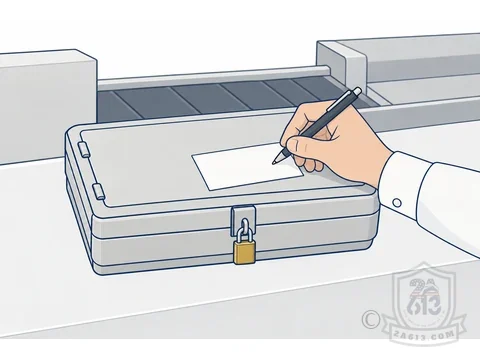
You sign a declaration tag. It goes in the bag, so TSA knows what it is when it shows up on the scanner.
Picking Up Your Bag
On our Delta trips, the bag got big zip ties and did not come out on the regular carousel.
We picked it up at the baggage office (lost and found). Often an officer checked our ID before handing it over.
Other airlines may do it differently.
A Tip
Some travelers declare a firearm partly so an expensive bag is less likely to get lost, because airlines track declared bags closely. Only declare a real firearm that you legally own and that is legal where you are going.
Driving with a Firearm
Traveling with firearms in your personal vehicle in the United States can be subject to both federal and state laws, and the specific regulations can vary from state to state. It's crucial to be aware of and follow all applicable laws when transporting firearms to avoid legal issues.
Thanks to one of the best presidents in recent history, the late Ronald Reagan, who signed the federal law that allows for interstate traveling with a firearm (the Firearm Owners Protection Act of 1986, passed by Congress). Meaning, as long as you're legally able to possess a firearm in your origin state AND your destination state, you may transport your firearm. For example, you are licensed in NY and traveling to FL.
For example New Jersey or Maryland.
The firearm is unloaded.
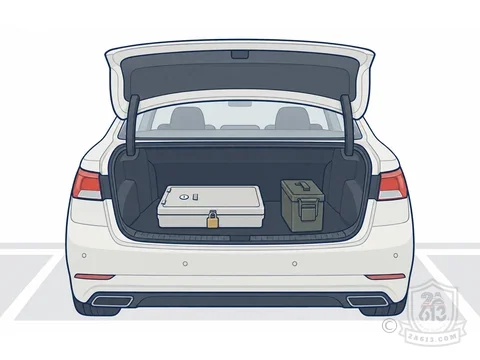
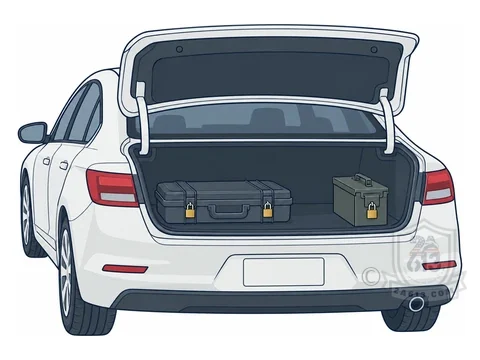
The firearm and the ammunition are in the trunk, not reachable from the passenger compartment.
No trunk? Keep them in a locked container that is not the glove box or the console. The back seat is part of the passenger compartment, so it does not count.
It does not give permission to carry in the destination state and does not prevent arrest.
It covers transport only if you may lawfully possess and carry the firearm at both the start and the end of the trip, the firearm is unloaded, and neither the firearm nor any ammunition is readily accessible or directly accessible from the passenger compartment. If the vehicle has no separate compartment, the firearm or ammunition must be in a locked container other than the glove compartment or console.(*)Source: 18 U.S.C. § 926A · checked 11/2026
Check State Laws: research the firearm laws of the states you will pass through and the state of your destination: firearms, magazine capacity and ammunition.
Transporting Across State Lines: some states may have specific rules, such as requiring firearms to be locked in a case or disassembled.
Transporting Ammunition: check whether there are any restrictions on the amount or type of ammunition you can carry.
Notify Law Enforcement: know the local laws; some states have a 'duty to inform', some don't. If you're pulled over, it's often a good practice to inform the officer that you have firearms in the vehicle. Follow their instructions and keep your hands visible and away from the firearms.
Local Regulations: some cities and municipalities have their own rules. Research local laws if you're traveling within a state.
Hotel Policies: check the firearm policies of the hotel where you plan to stay. Some hotels may require you to store your firearms in a designated secure area, like a hotel safe or a locked vehicle in the parking lot.
Ignorance of the law is not a valid defense, so it's crucial to be well-informed and adhere to all applicable rules when traveling with firearms.
Remember Tefillas Haderech (תפילת הדרך) and drive safely.
Driving Through NY, NJ, CT and MA
Federal safe passage (18 U.S.C. § 926A) protects the trip itself: from a place where you may legally have the gun to another place where you may legally have it, unloaded, with the gun and ammo out of reach. It is not a permit to carry. Some states on the East Coast are very strict, so be extra careful here.
New York
New York does not honor any other state's carry permit. Without a New York license, rely only on federal safe passage, and follow it exactly. Have a county license? Driving through New York City is only allowed with the gun locked up on a continuous, uninterrupted trip, unless you also hold a NYC permit (see our FAQ).
New Jersey
New Jersey does not honor any other state's carry permit. Passing through, rely on federal safe passage and follow it exactly: unloaded, in the trunk, ammo out of reach. See Can I Carry in New Jersey?
Connecticut
Connecticut's own law follows the federal rule for passing through: unloaded, and the gun and ammo not reachable from the passenger area (a locked container, not the glove box or console, if there is no trunk). While passing through you may not use or carry the gun, or sell or give it to anyone.
Massachusetts
Massachusetts law has its own rules for nonresidents traveling through in a vehicle, and for how a gun must be stored in a car. How these apply to your trip is a gray area: read them and ask a Massachusetts attorney before you go.
Sources: 18 U.S.C. § 926A · Conn. Gen. Stat. § 29-38d · M.G.L. c. 140 § 129C · M.G.L. c. 140 § 131C · checked 11/2026
Where your permit is honored: see our Reciprocity Map.
Long stops, an overnight stay or a missed flight connection in a state where you may not have the gun are gray areas. Federal safe passage is about the trip itself. ⚠️ Do your own research or speak to an attorney before you plan a stop.
Hotels and Rental Cars
Hotels and rental car companies set their own rules about guns. These are company policies, not laws, and they differ. Ask the hotel before you book, and read the rental agreement before you put a gun in a rental car.
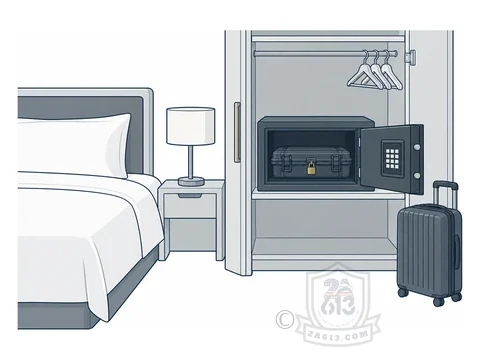
In the room: keep the gun on you or locked in your own lock box. Housekeeping and staff can enter the room.
Leaving it in the car (for example in the hotel parking lot): follow that state's car rule. In New York: unloaded and locked in a safe or locked box, out of sight, and not the glove box (see NY safe storage law). In Connecticut, an unattended pistol or revolver may only be in the trunk, a locked safe or a locked glove box.
The state's gun laws still apply in your hotel room and your rental car.
Sources: NYS Penal Law § 265.45 · Conn. Gen. Stat. § 29-38g · checked 11/2026
Gray Areas: Do Your Own Research
Airports in New York and New Jersey, if your flight is delayed or you miss a connection.
Magazine capacity and ammunition type at your destination and on your route.
City and local rules, which can be stricter than the state's.
Your own state's rules for taking a gun out of the house at all.
Gun laws change, and every trip is different. ⚠️ Do your own research, check the official sources for every state on your route, and speak to an attorney licensed in those states if anything is unclear.
This page is general information, not legal advice.
New to the terms? See the 2A Glossary.
To be accepted into our chats: after tapping Join, send us a message through the Contact Us page, choose “Join WhatsApp Groups Request”, then reply to the automatic email with all the requested details.
Your Application, Handled From Start to Finish.
One-on-one help with new applications and renewals. The decision to carry is yours; the paperwork, the checklists and the scheduling are ours.
- We Prepare the PaperworkEvery form filled out and submitted for you, with your authorization. Notary services available.*
- We Check Every DocumentEvery requirement checked before anything goes in.
- You Show Up ReadyYour 18-hour training scheduled, and you're prepped for fingerprinting and the interview.
Three Steps. Zero Guesswork.
- 1Tell Us What You NeedFill out the short request form.
- 2We Review & AdviseWe review your situation and advise on the best approach.
- 3You Apply With ConfidenceYour packet goes in complete, and we stay with you to the finish line.
Every completed application we've handled so far has been approved — but approval is always the agency's decision.
Or message us on WhatsAppA paid service. Every free guide stays free. The initial consultation is free. No paid work starts until you agree to the quote and a paid deposit, which is determined during the initial consultation. *Additional fees and restrictions apply. Past results do not guarantee future approval.
Join the 2A613 Community
Take our community survey and subscribe to updates. We only email about important topics and never sell your email to third parties.
Take the surveyLast updated: 11/08/2026 · כ״ח חשון תשפ״ז